
Last updated November 25, 2026
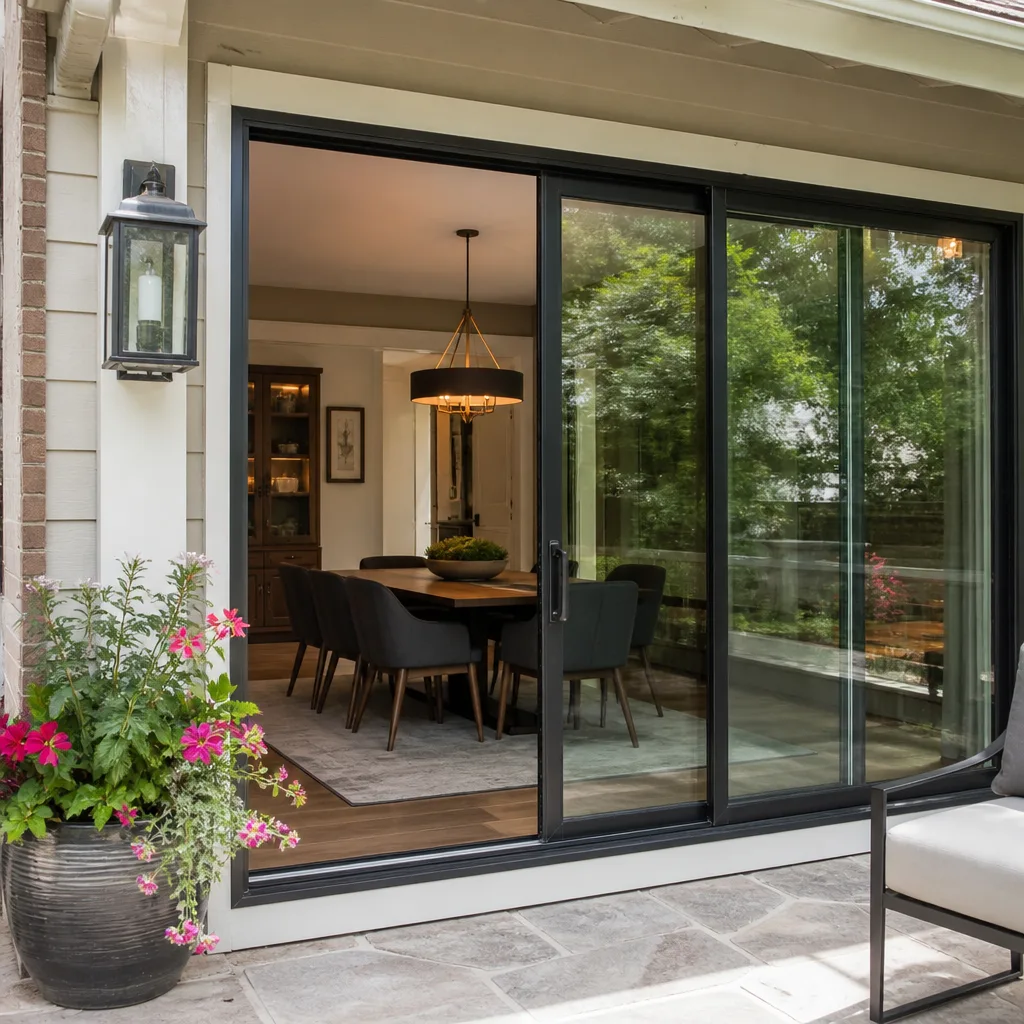 Sliding glass doors
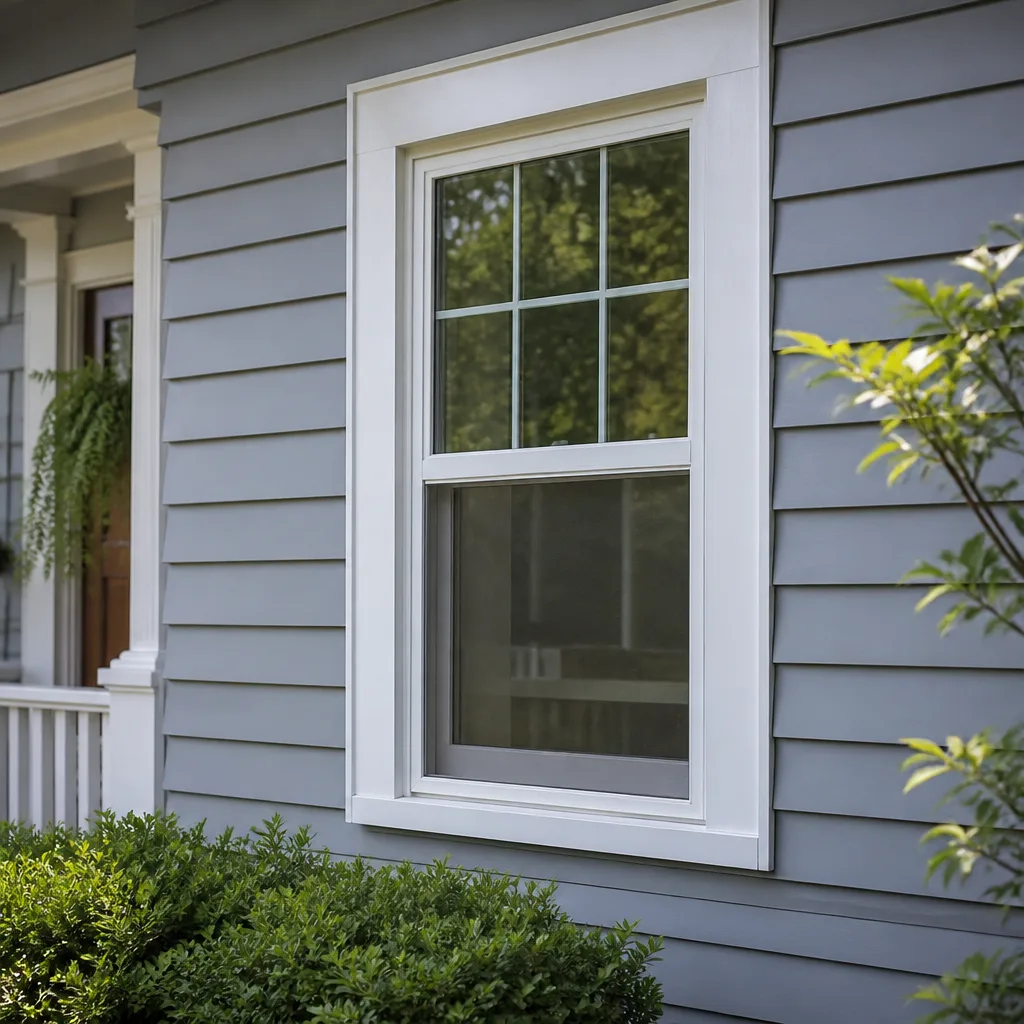 Single hung
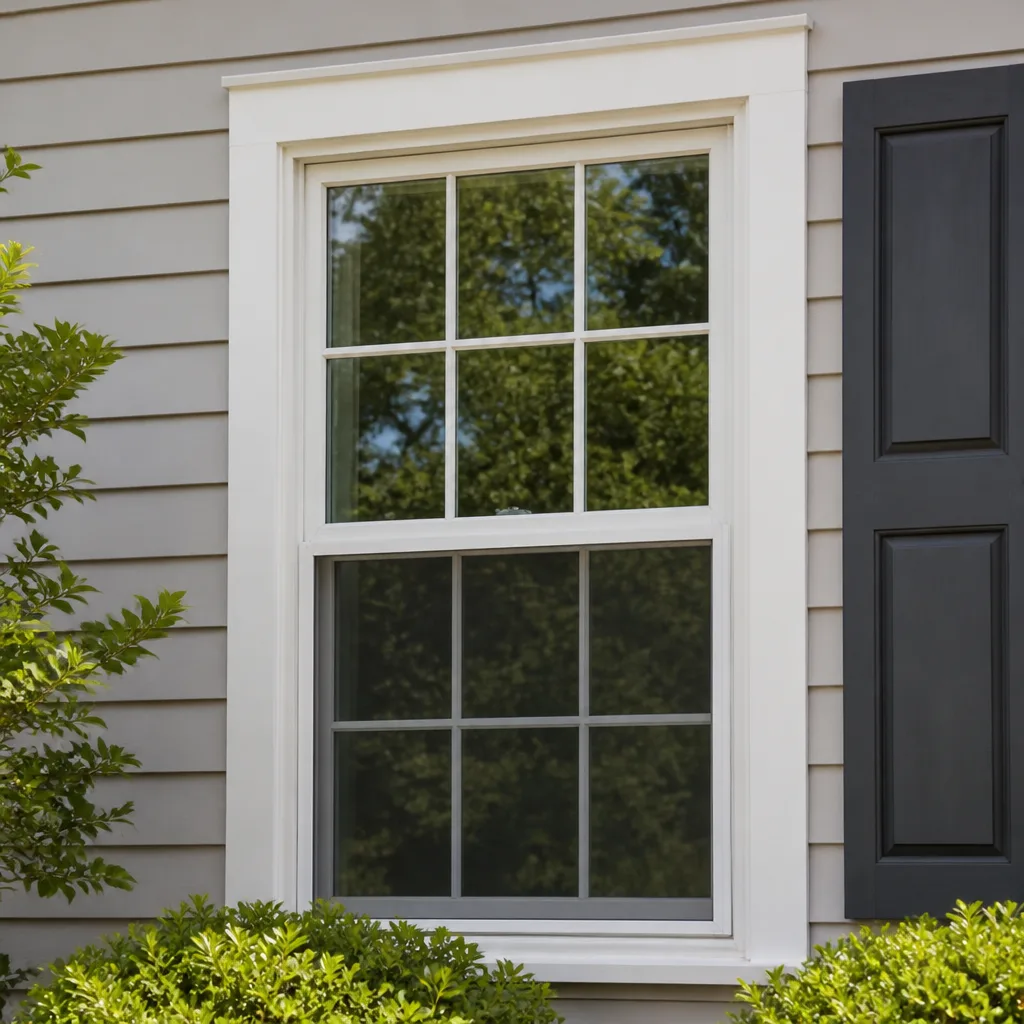 Double hung
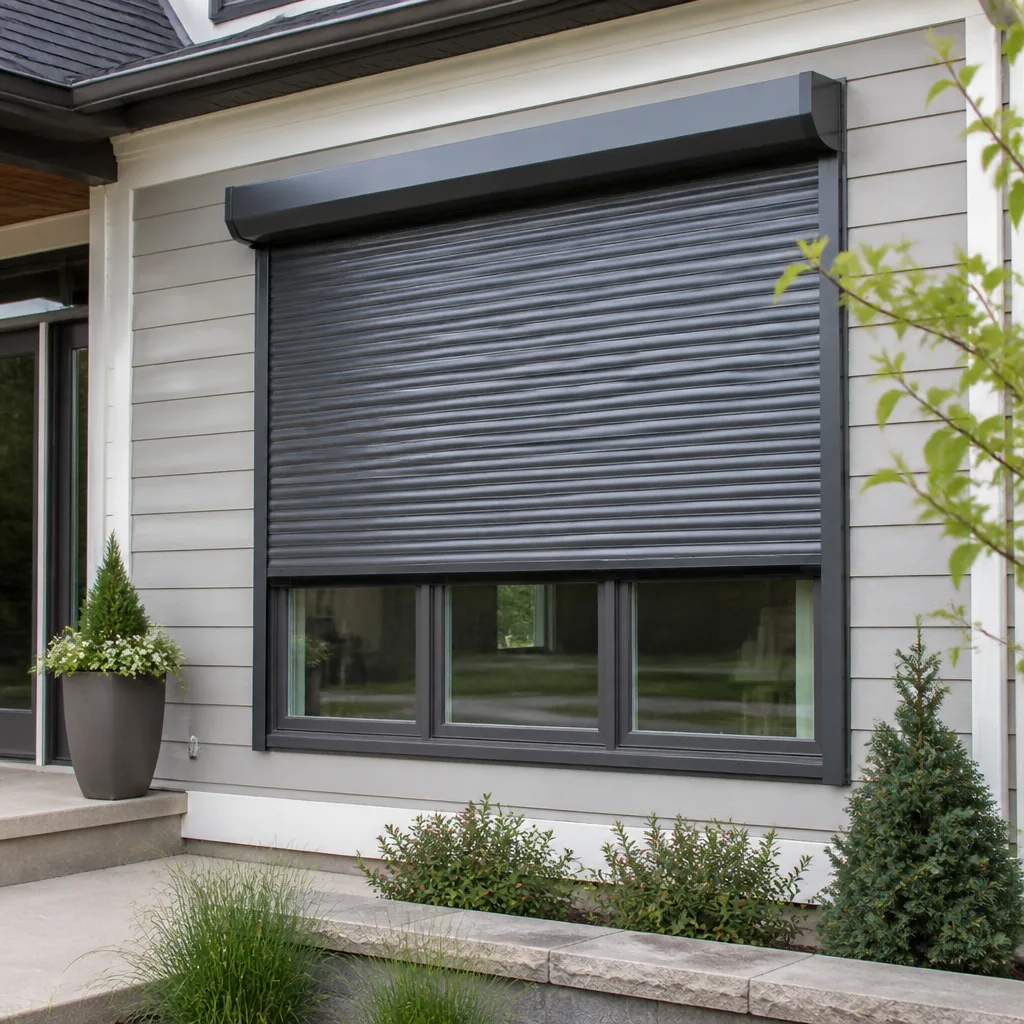 Horizontal roller
 Casement
 Bay & bow
 Entry doors
 Impact garage doors
 PGT
 CGI
Free in-home measure and quote - PGT, CGI and CWS impact lines compared on your actual openings, style by style
Get your free estimateSeasonal Windows & Doors Care for Roseville: Year-Round Homeowner’s Guide
The standard “spring cleaning” window checklist was designed for climates with freeze-thaw cycles. Roseville doesn’t have those – but it has something worse for window seals: a 70-degree temperature swing between a December night and an August afternoon. That swing, repeated across a year, works vinyl frames, glass units, and door sweeps in ways a Minnesota homeowner never sees. Most of the seasonal advice you’ll find online is written for a place with four equal seasons. Roseville runs on two dominant ones – a long, punishing dry summer and a compressed wet winter – bracketed by short transitions in October and March. Caring for your windows and doors here means working with that rhythm, not a generic calendar. In this guide, we’ll walk you through exactly what to check each part of the year, how to keep interior humidity from chewing up your frames, and how to build a simple twice-yearly inspection that catches problems while they’re still small.
Quick Answer
Seasonal window and door care in Roseville means prepping glass and frames in April before the dry heat, watching interior humidity during the October – November shoulder season to prevent condensation damage, clearing weep holes in December and January ahead of atmospheric river storms, checking door thresholds for settling after winter, and inspecting sliding door tracks and screens during the March wind-and-pollen window. A focused 30-minute inspection twice a year catches nearly everything before it turns into a replacement decision.
Styles & brands we work with
- Single hung
- Double hung
- Horizontal roller
- Casement
- Bay & bow
- Sliding glass doors
- Entry doors
- Impact garage doors
- PGT
- CGI
Table of Contents
- Why Roseville’s Climate Breaks the Standard Seasonal Checklist
- April Pre-Summer Prep: The Checks to Run Before the Heat
- The October – November Shoulder Season: Managing Interior Humidity
- December – February: Weep Holes, Atmospheric Rivers, and Thresholds
- March: The Wind-and-Pollen Window That Wears Out Tracks and Screens
- The 30-Minute Twice-Yearly Inspection Routine
- When Seasonal Care Stops Helping and Replacement Is the Answer
Why Roseville’s Climate Breaks the Standard Seasonal Checklist
Roseville sits in a valley climate with dry summers and mild, wet winters. That means the seasonal stress on your windows and doors looks different from what most care guides describe. There’s no freeze-thaw to worry about, but there is a genuine 70-degree gap between a cold December night and an August afternoon. Materials expand and contract across that range, and every joint, seal, and hinge on your windows and doors moves a little each time. Rubber weatherstripping that hardens in prolonged dry heat is one of the first things to fail here, not ice or frost. Vinyl frames that bake under direct summer sun can lose tolerances over many seasons. And the compressed rainy window – atmospheric river events that dump weeks of rain into days – tests every seal and drain your windows have at the same time.
This is also why the calendar matters. In a cold-climate city, summer is the relaxed season for window care because the weather isn’t actively damaging anything. In Roseville, summer is the season of highest stress on glass and frames, and the short damp months are when water intrusion becomes the dominant risk. Try to match your attention to when the climate is actually chewing on the envelope, not to a generic “spring and fall” schedule.
We’ve seen this play out the same way across Roseville neighborhoods season after season. A homeowner who re-seals a sliding door threshold in October avoids a much bigger headache when the first really wet storm rolls through in January. Small timing choices, made twice a year, do more for a window’s lifespan here than any product you can spray onto the seal.
April Pre-Summer Prep: The Checks to Run Before the Heat
April is your best month for meaningful outdoor window care in Roseville, for a simple reason: temperatures are still mild enough to work comfortably outside, and doing it now means you’ve locked in performance before the summer heat stress begins. By June, an afternoon on a west-facing wall is unpleasant, and by August it’s genuinely risky to be up on a ladder for more than a few minutes. If you do any ladder work, do it in mild weather and have someone spotting you. For anything that requires opening a frame, re-setting glass, or getting at seals that sit behind trim, a trained professional is the right call.
Here’s the April checklist we’d run on any Roseville home:
- Walk the exterior glass, one wall at a time. Look for hazing or fog between panes. Foggy glass is a sign the sealed unit has failed and is not something a coating fixes.
- Check frame caulking at every corner and sill. Hairline cracks and gaps at the joint between frame and wall are the number one entry point for summer dust and, later, winter water. Run the back of your hand along the caulk line; if it’s chalky or cracking, note it.
- Test every operable window and exterior door. Open and close them fully. If a window drags or a door rubs at the top and bottom of its opening as the temperature warms, that tells you the alignment has drifted.
- Look at the glass-to-frame gasket inside each opening. A hardened, shrinking gasket lets air pass even when the window is shut.
- Inspect exterior door sweeps and the threshold. Check that the sweep is flush with the sill when the door is closed. Gaps here are where dry summer air and later rain find a way in.
- Clean the drains and weep holes (we’ll come back to this in detail below), but at minimum make sure nothing is blocking them going into the heavy-use months.
Note what you find. A written list lets you prioritize and compare against next year’s walk-through – that comparison is one of the most useful tools a homeowner has for spotting slow degradation. If a finding looks like more than a seal or alignment issue, that’s a good moment to bring in a specialist for a free estimate rather than guess at it. Our team at Roseville Window Replacement Pros works with product lines chosen to match the actual problem, not the inventory on hand, so the right product is picked after we understand what your home needs.
The October – November Shoulder Season: Managing Interior Humidity
This is the period most Roseville homeowners underrate. As temperatures drop and the rains begin, homes get sealed up for longer stretches, and interior humidity climbs. That matters for windows because warm moist indoor air meets cooler glass and frames, and the moisture condenses. A little condensation on cold mornings is normal. Persistent wetness – water pooling on the sill, or streaks running down the inside of the frame – is not, and it’s what damages interior finishes and can begin to compromise the frame material itself.
Where the moisture goes matters. If it sits on the sill, wood and finish surfaces soak it up. If it runs into the jamb, it can find a path behind the frame. In a Roseville home with older aluminum or first-generation vinyl windows, this shoulder-season humidity is often the thing that finally shows a homeowner the window’s limits.
The good news is you can usually manage the shoulder-season humidity problem without doing anything to the windows themselves:
- Run bathroom and kitchen exhaust fans longer than feels necessary. Fans pull moisture out before it reaches a cold pane.
- Use the HVAC system’s fan setting more than you might otherwise. Continuous air movement distributes moisture evenly rather than letting it pool near glass.
- Keep indoor humidity in check. A cheap hygrometer from any hardware store tells you what your home is actually doing inside; you want it low enough that cold glass isn’t constantly wet on cool mornings.
- Don’t stack plants or furniture against the base of a window or door. Air needs to move past the assembly for it to dry.
- Wipe up standing condensation when you see it. If you have to do this regularly, that’s a signal to look at the window or the home’s ventilation.
If persistent interior condensation keeps returning even after you’ve managed humidity, that’s the point to have the glass unit looked at, because the inner seal may already be failing. In our experience, this is where a well-matched product makes the biggest difference – a thermally efficient line like the options we carry from ES Windows, chosen for the specific room and orientation, can turn a chronically foggy window into a forgettable one. It’s window replacement territory at that stage, and the right time to price it is before the wet season is in full swing.
December – February: Weep Holes, Atmospheric Rivers, and Thresholds
Roseville’s wet season arrives compressed – long dry stretches punctuated by big storms, often atmospheric river events that push a lot of rain in a short window. Your windows and doors are built to shed that water, but only if the paths it uses to escape stay open. The small openings at the bottom of exterior window frames and behind sliding door tracks are called weep holes, and they exist specifically so water that gets behind the glass or the frame can drain out. Blocked weep holes are one of the most common causes of interior water damage we see from homes after a heavy storm.
Here’s what to handle in December and January:
- Clear weep holes before the first major storm of the season. Use a stiff brush or a thin tool to dislodge dust, cobwebs, and landscaping debris. Never seal a weep hole – it’s a drain, not a defect.
- Check the exterior threshold on every entry and sliding door. Look for debris caught in the track that would stop water from running away from the door. Clear the path so water flows outward, not into the house.
- Inspect door thresholds for settling. In Roseville’s expansive clay soils, a small amount of seasonal settling around an entry door or sliding door is normal. What you’re hunting for is a gap that appears at the door-to-sill line when the rains arrive.
- Watch the inside of every sliding door track after a big storm. If water is pooling inside, that tells you either the weep hole or the threshold is compromised.
- Test the door sweep and weatherstripping again in mid-January. Cold, wet conditions are when weatherstripping that looked fine in October starts showing a gap.
For door replacement candidates, especially older sliding doors and wood entry doors, this is the season when the case for upgrading becomes obvious to the homeowner. If you’re doing windows too, our window installation team handles the full envelope, so there’s no handoff gap between a new sliding door and the windows beside it. Replacement work is a planned project, not an emergency repair, so planning it in the colder months for a spring or summer installation is a sensible sequence.
March: The Wind-and-Pollen Window That Wears Out Tracks and Screens
If Roseville had a single worst season for sliding door tracks and screen frames, it would be March. The spring winds pick up, pollen spikes, and fine dust and grit get driven into track channels and screen mesh. Every pass of a sliding door over a gritty track is like running a file over the rollers and track surface, and over years that’s what produces the sag, drag, and noise most homeowners associate with an “old” sliding door. Screens take the same abuse, with the fine pollen and dust abrading the mesh edge and straining the screen frame’s spline.
Run this sequence in late March:
- Vacuum the track channel with a crevice tool before you touch it with any lubricant. Sit the vacuum nozzle low and pull slowly along the full length – twice for each channel.
- Wipe the track and the door’s roller area with a slightly damp cloth to lift the pollen film. Don’t use a lot of water; you’re cleaning, not flooding.
- Check each roller’s movement by rolling the door slowly across its whole travel. Look and listen for a spot where the door hesitates or drags – that’s a roller or a track issue.
- Inspect screens from both sides for pinholes, stretched mesh, or a spline that’s popped out of the frame groove. A screen that’s lost its spline in a spring wind is a candidate for a frame replacement.
- Rinse pollen off the exterior glass with a garden hose. A dry cloth on a pollen-covered pane just scratches it.
- Re-check the door threshold after the winds; grit blown into the door’s closing edge is exactly the grit that wears down the sill over a season.
March is also the month when products that have been on the edge tell you so – a frame that’s been moving in and out of tolerance all year gets worse in the spring. In our experience at Roseville Window Replacement Pros, the sliding doors most likely to need a fresh track or a full replacement are the ones that have a decade of grit cycles on them. When it’s time, a product like Mr-Glass or an ECO Window Systems line matched to the opening gives a cleaner, quieter door without flipping the whole assembly. This team keeps both a thermally efficient track and an impact-rated track (through CWS and CWS-adjacent options) so the right fit is chosen by performance requirement, not by what’s in stock.
The 30-Minute Twice-Yearly Inspection Routine
You don’t need a four-season schedule. You need two focused inspections a year, timed to Roseville’s climate instead of the standard spring-and-fall rhythm. Run one in late March before the winds set in and one in late September before the wet season opens. Each one takes about 30 minutes and covers everything that matters.
Here’s the routine:
- Minutes 1 – 5. Walk the exterior glass. Check every pane for fog, cracks, or a failed seal. Note anything that’s changed since the last inspection.
- Minutes 5 – 10. Check frame and caulking. Look at every corner, sill, and head joint. Hairline cracks in caulk are what you’ll fix with a fresh bead.
- Minutes 10 – 15. Cycle every operable window and exterior door. Open and close them fully. Listen for drag, scrape, or hesitation.
- Minutes 15 – 20. Clear weep holes and track channels. Use a brush or vacuum. Do not use sharp tools that can score the frame.
- Minutes 20 – 25. Check door sweeps, weatherstripping, and thresholds. Run the back of your hand along each one. Note anything that’s hardened, curled, or has a gap.
- Minutes 25 – 30. Write it down. Keep a simple paper log: date, item checked, and what you saw. Compare against the previous inspection. Any change is the signal worth acting on.
That’s it. Thirty minutes in late March and thirty in late September will surface 95 percent of the issues that would otherwise cost you real money. Anything that requires opening a frame, working with sealed glass, or going above the first story is the point to bring in a trained professional – windows and doors under stress can bite, and a fall from a ladder is a much bigger expense than any service call. Roseville Window Replacement Pros offers free estimates in Roseville on anything an inspection turns up.
When Seasonal Care Stops Helping and Replacement Is the Answer
Seasonal care buys you years of service, but it can’t rebuild a unit that’s structurally spent. At a certain point, the question shifts from “what do I clean this season?” to “which replacement?” Here are the signals that mean you’ve crossed that line:
- Fog between panes. A failed sealed unit isn’t coming back, no matter how much you wash the exterior.
- Frames that have lost their shape. If gaskets keep shrinking and frames keep pulling apart, the material has moved past tolerance.
- Repeat water intrusion after a heavy storm, even with clean weep holes and a clear threshold.
- Interior condensation that returns after you’ve managed humidity, at multiple windows, throughout the shoulder season.
- Doors that no longer sit flush with the opening, even after checking the threshold and weatherstripping.
Roseville homeowners replacing that many units at once are choosing between a wide range of product lines, and that breadth is why we work with eight manufacturer partnerships across the window and door category. CWS, ECO Window Systems, Mr-Glass, and ES Windows sit alongside impact-rated PGT and CGI lines, so the product gets specified by the problem, not the other way around. If impact resistance is a consideration for you, that’s a decision to have with a specialist in front of the opening, not a shopping decision made from a spec sheet.
Common Mistakes to Avoid
- Running a spring-cleaning checklist built for a cold climate. Roseville doesn’t have freeze-thaw stress, but it has a much bigger year-round temperature range and a compressed wet season. Match your calendar to the actual climate, not to a magazine.
- Sealing weep holes to “keep water out.” The opposite happens. Weep holes drain the water that gets behind the glass and frame. Block them and it goes into the wall.
- Ignoring interior condensation during the October – November shoulder season. Persistent wetness on the inside of a frame often means the inner seal is already compromised; by the time you notice, the damage is done.
- Skipping the March track and screen cleaning. Spring winds and pollen cause more wear on sliding door tracks and screen frames in this region than any other month. Clean them, or you’ll replace them sooner.
- Lubricating a track before vacuuming it. Lubricant on top of grit makes an abrasive paste. Vacuum first, then wipe, then – if your manufacturer recommends it – lubricate.
- Ladder work in the summer heat. Roseville’s summer afternoons are not the time to be on an extension ladder. Do any exterior checks in mild weather, and don’t do anything above the first story yourself.
- Treating every window and door as an individual problem. When multiple units fail at once, that’s a sign to look at the whole envelope – glass, frames, doors, and thresholds together – because the fix usually is too.
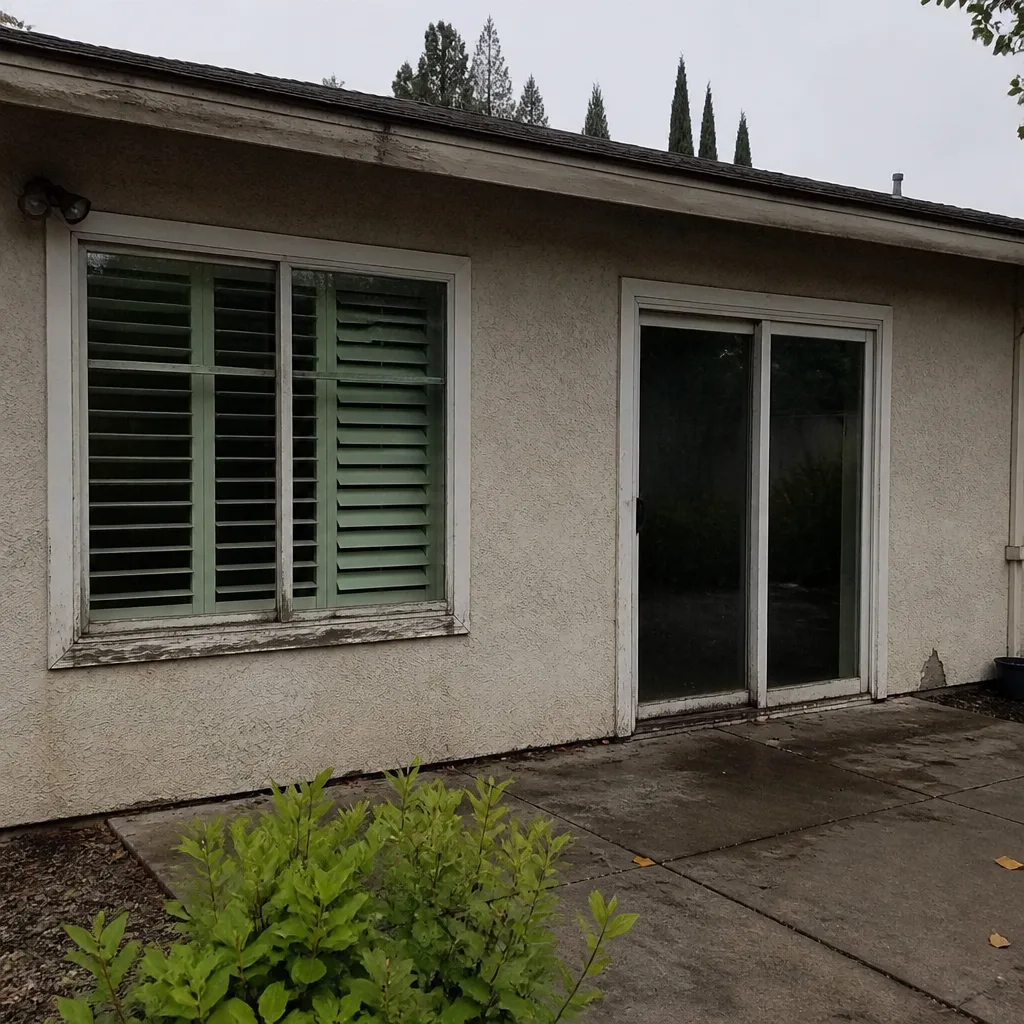
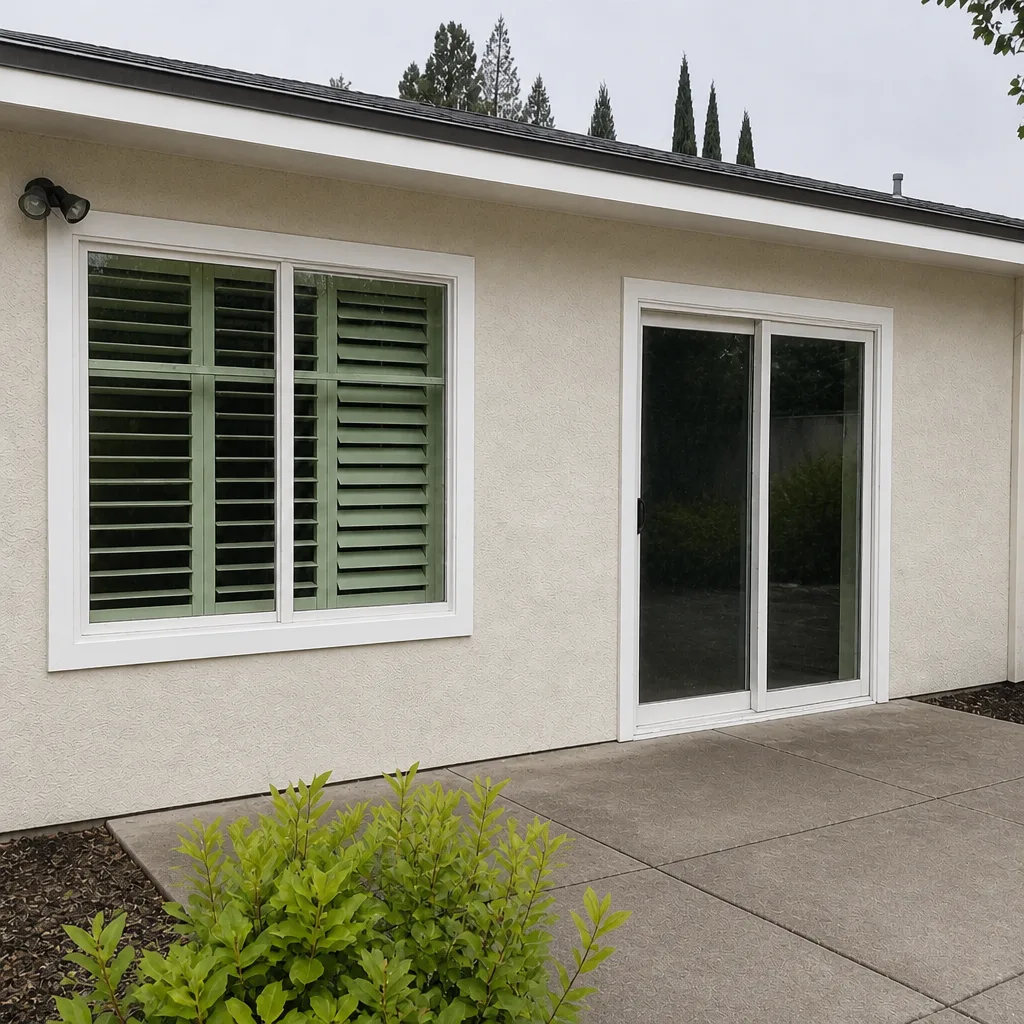
See the difference
 Before
 After
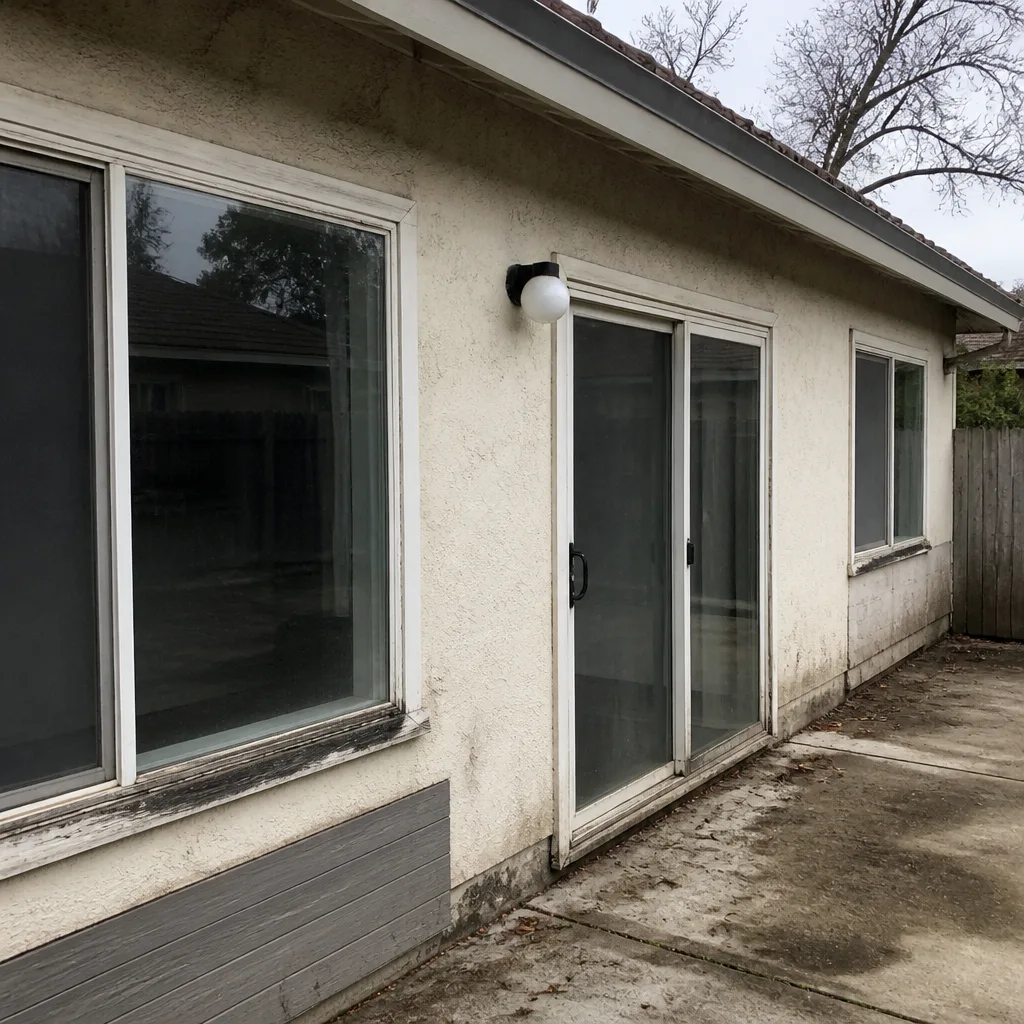 Before
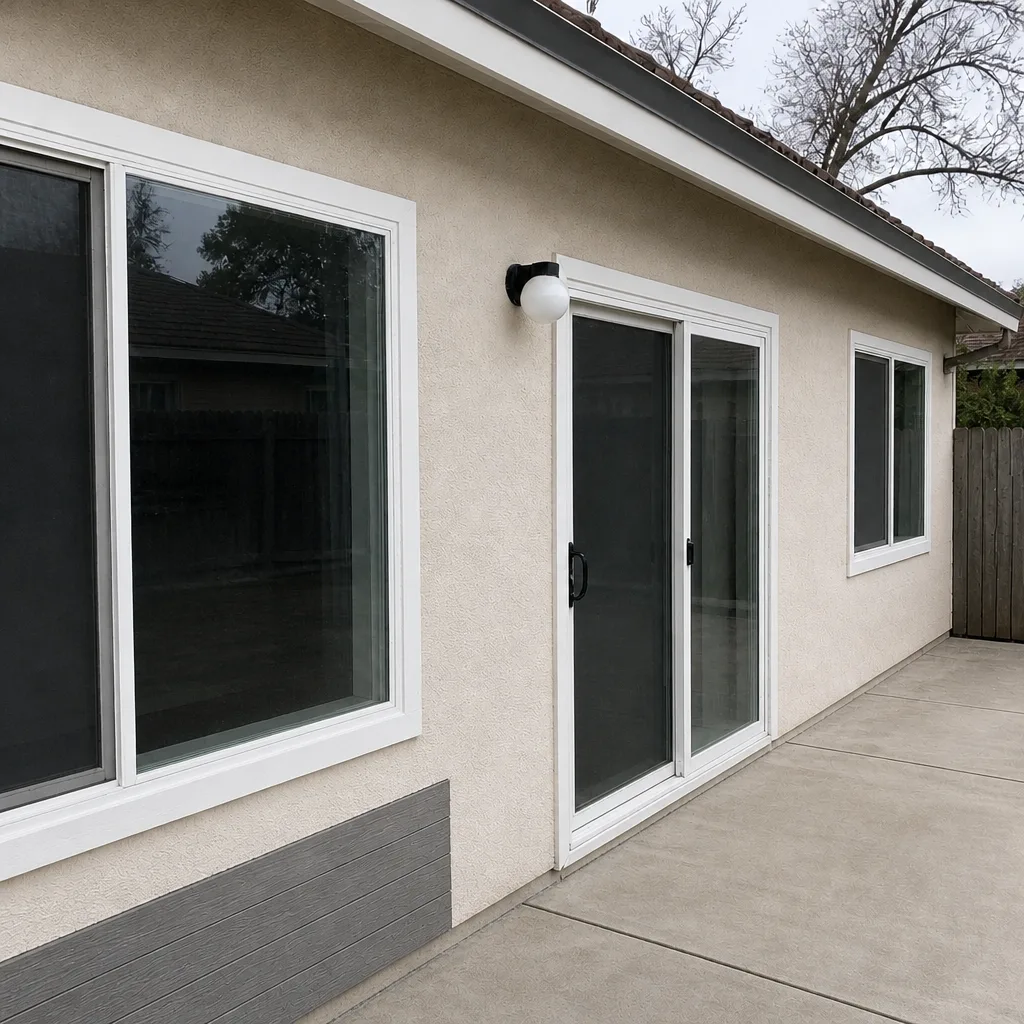 After
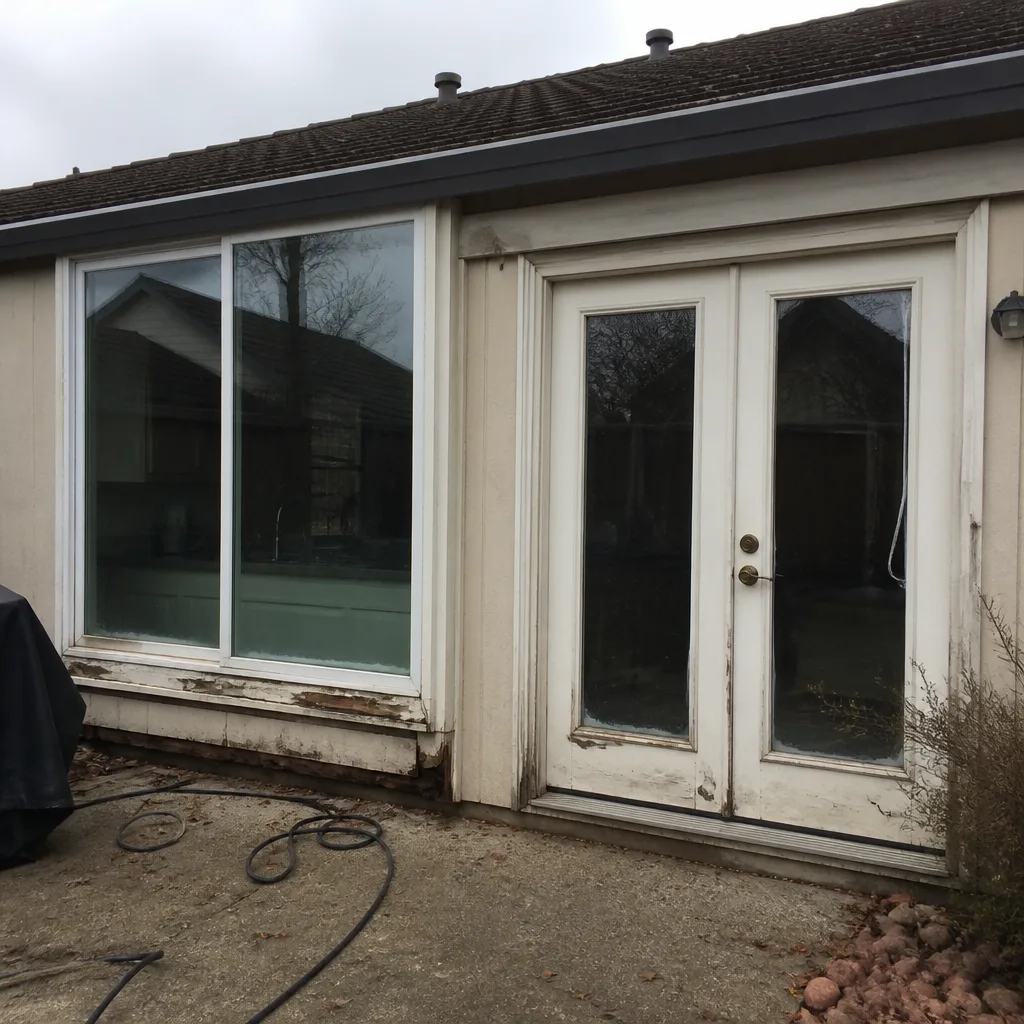 Before
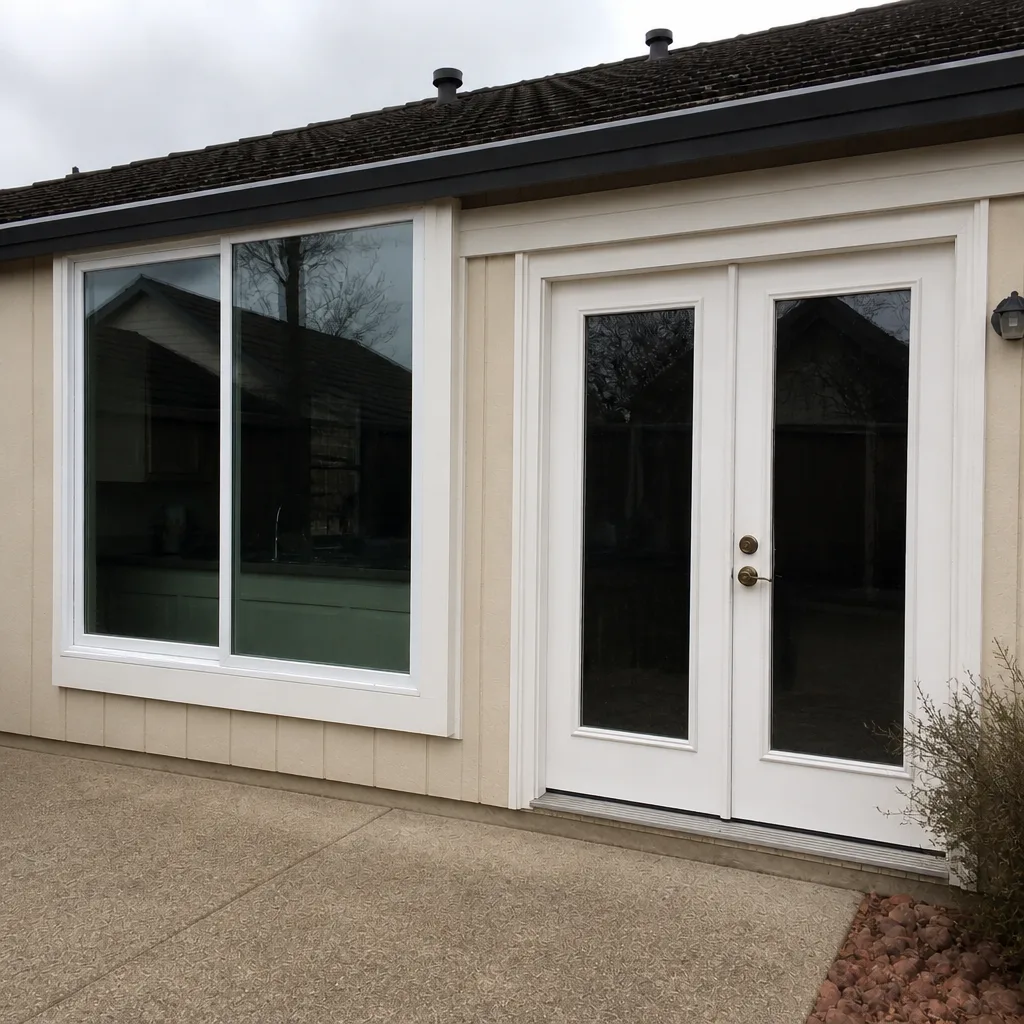 After
When to Call a Professional
If a window or door has a failed sealed unit (fog between panes), a frame that won’t sit flush, visible water intrusion after a storm, or interior condensation that keeps returning after you’ve managed the humidity, those are beyond seasonal care. The same is true for anything that requires opening a frame, working with sealed glass, or getting above the first story – the stress and the fall risk are real, and a trained professional is the right person to handle it. Roseville Window Replacement Pros offers free estimates in Roseville – call (279) 529-6442. Our team takes replacement and installation jobs of three openings or more, so if your whole envelope needs attention, the free estimate is the right first call.
Frequently Asked Questions
Twice a year, in late March and late September, is enough. Those dates bracket Roseville’s two dominant seasons – the dry summer and the wet winter – so you’re checking before each one starts rather than in the middle of either. A 30-minute inspection covers glass, frames, operable units, weep holes, tracks, and thresholds, and it’s the single most useful maintenance habit for a Roseville home. If you find something you can’t handle in the first 30 minutes, call (279) 529-6442 for a free estimate.
Interior condensation is most common in Roseville during the October – November shoulder season, when homes get sealed up for longer stretches and interior humidity rises while outdoor temperatures drop. Warm, moist indoor air meets cooler glass and frames, and it condenses. Manage it by running exhaust fans longer, keeping indoor humidity low, and not blocking airflow around the assembly. If it keeps returning after you’ve managed humidity, the window’s inner seal may be compromised – call (279) 529-6442 for a free estimate.
No. Weep holes are drains, not defects. They let water that gets behind the glass or frame escape. Sealing them traps that water inside the wall. Clean them before Roseville’s wet season starts, but never block them. If you’re seeing repeat water intrusion even with clean weep holes, that’s a sign the window has more serious problems – call (279) 529-6442 for a free estimate.
March winds drive fine grit and pollen into track channels, and every pass of the door over grit wears the rollers and the track surface. That’s why sliding door tracks and screen frames need cleaning in March, not in the fall. Vacuum, wipe, then inspect the rollers. If a door still drags after cleaning, the roller or track is worn and the door may need replacement – call (279) 529-6442 for a free estimate.
Yes. Roseville’s climate is dry through the summer with a compressed wet winter, so the risk pattern is different from coastal California or the mountain regions. There’s no freeze-thaw to worry about here, but there is a wide temperature range and a short, intense wet season. The maintenance calendar shifts accordingly: pre-summer checks in April, humidity management in October – November, weep hole work in December – January, and track cleaning in March. Call (279) 529-6442 if you’d rather have a specialist run the inspection for you.
We take replacement and installation jobs of three openings or more. That means a multi-window project, a full envelope package, or a mix of windows and doors. If your inspection turns up one window that needs attention, seasonal care or a smaller service appointment is the right path. If you have three or more failing units, that’s exactly the job we’re built for – call (279) 529-6442 for a free estimate.
The Bottom Line
Roseville’s climate doesn’t run on four equal seasons, and a maintenance calendar built around the real rhythm does more for your windows and doors than any checklist from a cold-climate magazine. Run one focused inspection in late March before the winds set in and one in late September before the wet season opens. Manage shoulder-season interior humidity, clear weep holes before each atmospheric river, and check door thresholds for settling after winter. Those habits, done twice a year, catch almost every problem while it’s still small. When they stop working – fog between panes, frames that won’t sit flush, water that keeps coming in – replacement is the right answer, and Roseville Window Replacement Pros is a dedicated specialist with eight manufacturer lines to match the product to the actual problem. Call (279) 529-6442 for a free estimate.
Written by the team at Roseville Window Replacement Pros.