
Last updated November 25, 2026
 Sliding glass doors
 Single hung
 Double hung
 Horizontal roller
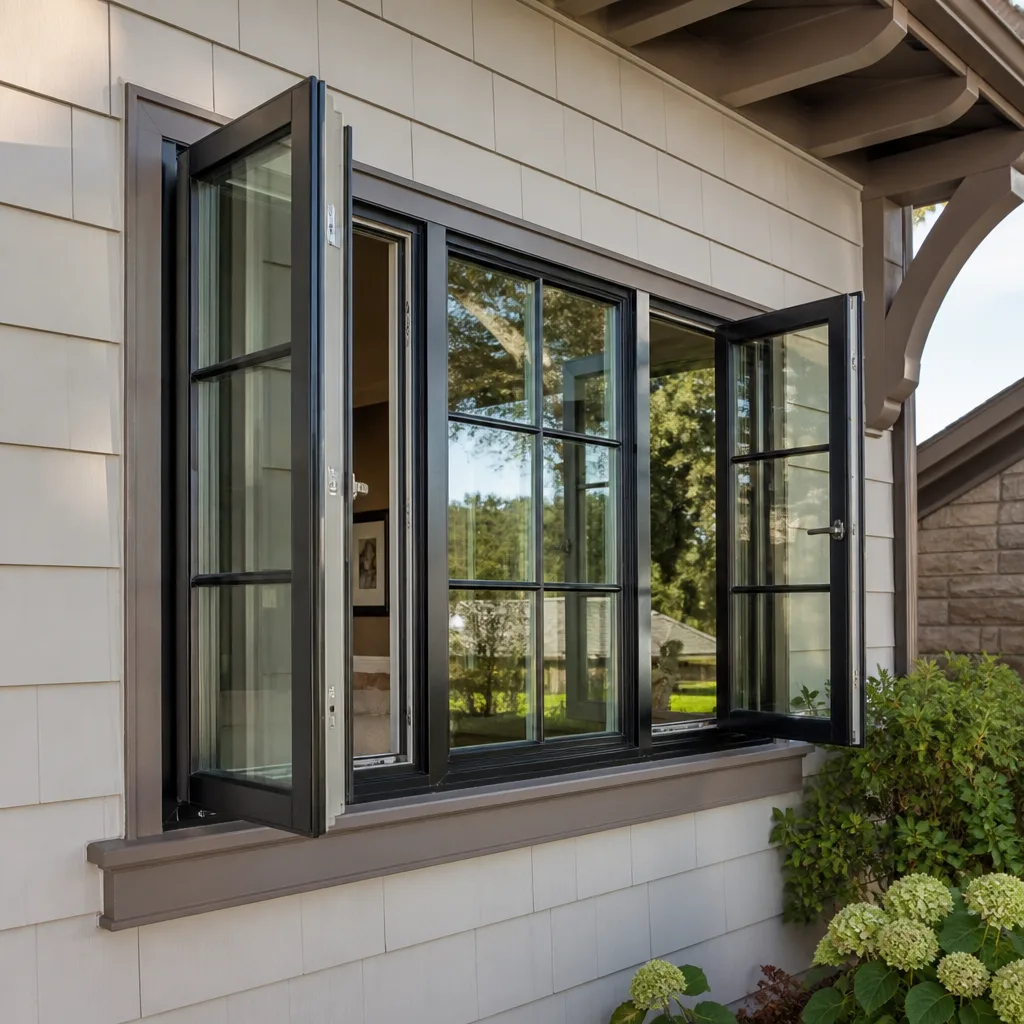 Casement
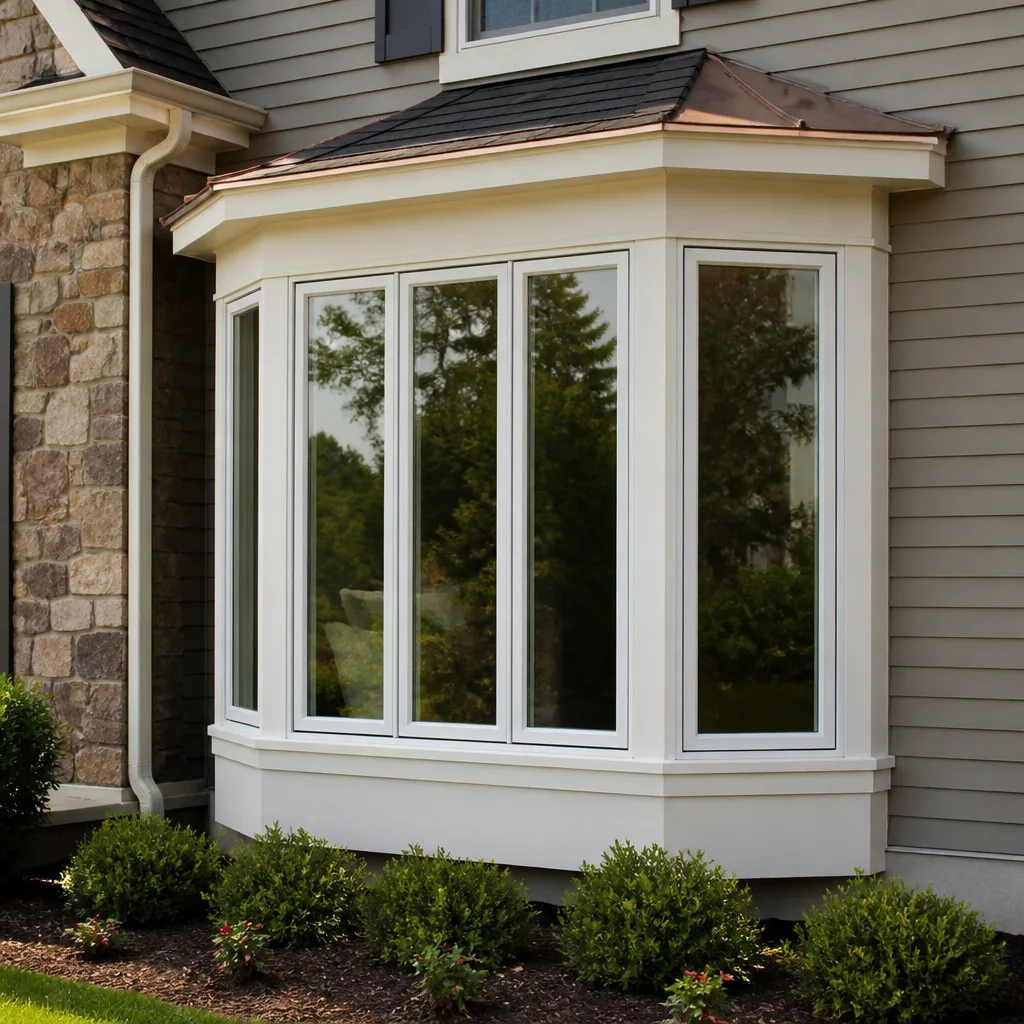 Bay & bow
 Entry doors
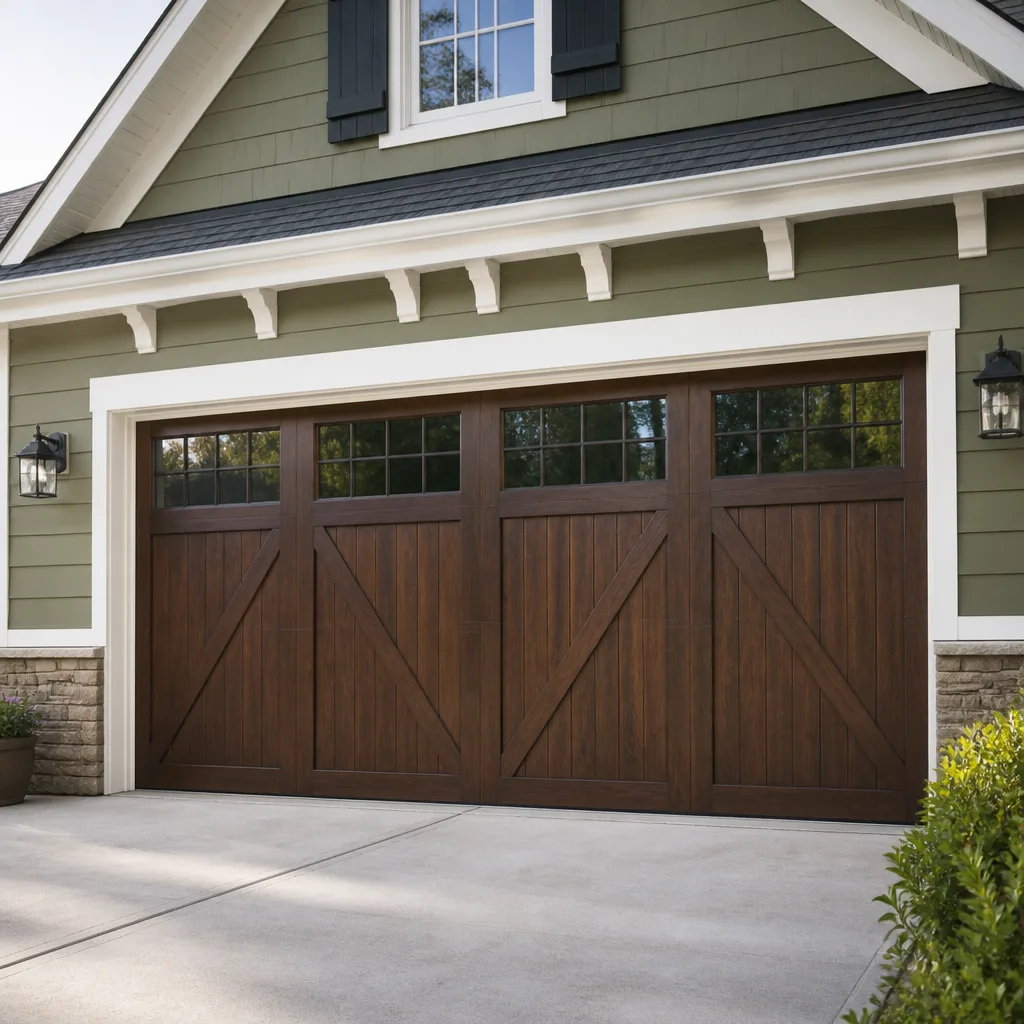 Impact garage doors
 PGT
 CGI
Free in-home measure and quote - PGT, CGI and CWS impact lines compared on your actual openings, style by style
Get your free estimateDIY vs Professional Windows & Doors: The Roseville Homeowner’s Decision Guide
Here’s the part most DIY guides skip: a capable homeowner can physically set a window into a rough opening. What that homeowner usually can’t do is install it in a way that passes a Roseville permit inspection, clears their HOA’s finish standards, and keeps the manufacturer’s warranty intact. The gap between “installed” and “compliantly installed” is where the savings quietly disappear. This guide walks through what California law actually restricts, where warranties get voided in the fine print, which Roseville projects are reasonable to tackle yourself, and how to split the work so you keep the easy labor and hand off the risky parts. It’s the decision framework we’d give a neighbor.
Quick Answer
In Roseville, DIY window and door work is only genuinely reasonable for cosmetic and prep tasks: interior trim, painting, removing old coverings, and cleanup. The installation itself, anything that touches structural framing, waterproofing, or the building envelope, is work California reserves for licensed contractors, and doing it yourself can void manufacturer warranties and complicate a future sale. For full-unit replacement, a professional install is almost always the safer economic choice, even when the DIY skills are there.
Styles & brands we work with
- Single hung
- Double hung
- Horizontal roller
- Casement
- Bay & bow
- Sliding glass doors
- Entry doors
- Impact garage doors
- PGT
- CGI
Table of Contents
- Where California Draws the Line on DIY
- Title 24 and Why It Changes the Math
- How DIY Voids Manufacturer Warranties
- Three Window Scenarios Where DIY Makes Sense in Roseville
- Three Scenarios Where DIY Creates Liability That Follows the Property
- The Real Cost of DIY Materials vs Specialist Pricing
- The Hybrid Approach: Splitting Labor Legally
- Choosing the Right Product Before You Choose a Method
Where California Draws the Line on DIY
California’s contractor licensing law is stricter than most homeowners assume. Under the Business and Professions Code, any project priced at $500 or more in combined labor and materials requires a licensed contractor, and window replacement routinely clears that threshold once you add up the unit, flashing, sealant, and disposal. The law isn’t aimed at the weekend handyman swapping a screen; it’s aimed at work that affects the safety and structural integrity of a home.
Certain tasks in a window installation are effectively contractor territory in Roseville and statewide, regardless of the homeowner’s skill level:
- Altering the rough opening or reframing when a replacement unit doesn’t match the existing size. That’s structural carpentry and triggers permitting and inspection.
- Installation that affects the weather-resistant barrier and the building envelope. Improper flashing or sealant is the single most common cause of water intrusion we see.
- Electrical work if the new unit includes powered blinds, integrated lighting, or a door with a wired component. That requires a licensed electrician.
- Permitted work of any kind. The permit is issued to a licensed contractor or to the homeowner, but the inspection is judged against code the homeowner may not be trained in.
For a homeowner doing their own work on their own primary residence, California does allow some owner-builder flexibility. But that flexibility comes with disclosure obligations at resale and shifts all liability onto you. Roseville’s building department will issue a permit to a homeowner, but the inspection standard is identical to what a licensed installer faces. If you’re weighing this against window installation, the central question is whether you can meet that standard confidently.
Title 24 and Why It Changes the Math
Title 24 is California’s building energy efficiency standard, and it applies to replacement windows and doors in a way that surprises a lot of Roseville homeowners who’ve done DIY work in other states. When you replace a window, the new unit has to meet the prescriptive requirements for the climate zone Roseville sits in: specific U-factor and solar heat gain coefficient targets, correct glazing, and proper air sealing at the frame.
Here’s the practical problem. A homeowner buying a window at retail can’t easily verify the unit meets Title 24 requirements, and the paperwork that proves compliance is often a manufacturer certificate that gets filed with the permit. Without that documentation, a permitted job can fail inspection, and an unpermitted job leaves a compliance gap that surfaces during a future sale when the buyer’s inspector or appraiser looks for it.
Placer County and Roseville enforce this because it affects the home’s energy rating and, in some cases, whether the property can be sold with clear disclosures. A licensed installer working with a manufacturer that supplies compliant documentation handles the Title 24 piece as routine. A DIYer has to learn the climate zone requirements, find a compliant unit, and produce the certificate themselves. For an entry door, the requirements are less strict than for glazing, but a door replacement still has to meet air infiltration and insulation standards.
For impact-rated products, PGT and CGI lines both carry compliant glazing that satisfies Title 24 for our climate zone. That’s the kind of detail a spec-driven specialist handles before the first unit is ordered.
How DIY Voids Manufacturer Warranties
Manufacturer warranties on windows and doors almost universally require installation by a licensed contractor, and the language is buried in the fine print rather than the product brochure. It usually reads as a condition of coverage: the warranty applies to the product as installed by a qualified professional, and installation-related defects are excluded when the installation is not performed by one. A homeowner reading the marketing sheet never sees this.
What that means in practice: if a DIY-installed window leaks at the sill two years later, or the glass seal fails because the unit was set slightly out of level, the warranty claim is likely denied. The product was fine; the installation broke it. Water intrusion around a poorly flashed frame is the most common failure, and it almost always traces back to installation, not the unit.
Sliding door warranties carry similar conditions, and the stakes are higher because a sliding door failure can mean significant water and pest entry. Most homeowners only discover the fine print when they file a claim, by which point the manufacturer has every legal right to point to the installation condition. In our experience, the contract line that specifies installation by a licensed professional is the one sentence that determines whether a warranty is worth the paper it’s on.
Choosing a manufacturer with strong warranty support, and then having that manufacturer’s product installed by someone with the right credentials, keeps the coverage intact. That’s a big part of the value of window replacement as a coordinated purchase rather than a product-only transaction.
Three Window Scenarios Where DIY Makes Sense in Roseville
We’re not going to tell you that every homeowner needs a professional for every task. There are real, specific jobs where picking up a tool yourself is a reasonable use of a weekend. Here are three window scenarios where DIY genuinely works in and around Roseville.
- Interior trim and casing replacement. The finish carpentry on the inside of the window is cosmetic. If the existing trim is dated or damaged and you’re comfortable with a miter saw, this is fair game. Buy pre-primed trim, prime all six sides, and you’ll get a clean result without touching the envelope.
- Removing old window coverings, blinds, and hardware. Tearing out old blinds, valances, and the brackets before an installation appointment is easy labor that saves installation time. It’s the kind of prep a homeowner can own completely, and it costs nothing to do.
- Interior painting, fill, and touch-up. Once the window is installed and the trim is up, painting the interior casing and wall area is finish work. A homeowner with a roller and good masking can do this as well as anyone, and it’s the piece of the job that takes the most time relative to skill.
What these three share: none of them touch waterproofing, the rough opening, or anything the inspector looks at. That’s the dividing line in Roseville. Finish and cosmetic work is yours; envelope work is the specialist’s.
Three Scenarios Where DIY Creates Liability That Follows the Property
Now the other side. These are the scenarios where the risk isn’t just a bad weekend project. The consequence attaches to the house and travels with it when you sell. We’ve seen all three.
- Full-unit replacement in an HOA community. Roseville and nearby neighborhoods have a lot of HOA-governed housing, and most HOA architectural review boards require exterior finishes, frame colors, and grille styles to match within a fairly tight tolerance. Installing a unit that clears the county’s code but fails the HOA’s standards means redoing it or documenting a variance. The HOA disclosure can hold up a closing.
- Sliding door replacement that touches the structural header. Sliding patio doors often sit under a header that requires specific shimming and anchoring to maintain load capacity. A DIY installation that gets the header shimmed wrong can cause sag over time, and the repair is far more expensive than the original installation would have been.
- Any replacement that is not properly permitted and documented. California’s mandatory disclosure laws require sellers to disclose unpermitted work, and a buyer’s inspector will flag a window or door installation that lacks a permit record. That disclosure can reduce the sale price or stall the deal, and the new owner inherits the problem.
Each of these has a common thread: the consequence is not just “you did it yourself.” It’s that the property carries a documented issue, and California’s disclosure regime makes sure the next buyer knows about it. That’s why the installation decision is really a real estate decision in this state, not just a home improvement decision.
The company that we operate is built around replacement and installation specifically, so the HOA review and disclosure pieces are routine rather than exceptional.
The Real Cost of DIY Materials vs Specialist Pricing
The DIY math usually looks something like this: the window costs X at a big-box store, the installer quotes Y, therefore installing it yourself saves Y minus X. That comparison is incomplete. A full picture includes every material and every hour, and the product gap between what a homeowner buys and what a specialist purchases is bigger than most people expect.
Here’s the honest breakdown of what actually goes into a single DIY window replacement:
- The unit itself. Retail pricing on a comparable quality window runs meaningfully higher than what a specialist pays, because specialists buy across eight manufacturer lines and negotiate at volume.
- Flashing, sealant, backer rod, house wrap patch, and foam. These add up fast and none of them are optional if you want the installation to hold.
- Shims, screws, and anchors. Inexpensive but not free.
- Permit fee. Roseville issues homeowner permits, and the fee is the same whether you or a contractor pulls it.
- Disposal. Old windows and doors have to go somewhere. A dump run costs gas and a fee.
- Tools you don’t already own. A caulk gun and pry bar are cheap; a good oscillating tool, laser level, and framing square are not, and they’re single-use purchases for most homeowners.
- Your time. A first-time installation takes three to four times longer than an experienced installer would take, and that’s assuming no surprises when the old unit comes out.
The honest comparison is total cost, including the tools you’ll never use again and the hours you could be doing paid work. The specialist’s advantage isn’t just the unit price. It’s the combination of volume pricing, tool investment spread across hundreds of jobs, and the fact that window installation is the team’s daily discipline.
A good example of where this matters is the entry door decision. A fiberglass entry door through the Therma-Tru line typically includes integrated weather sealing and a system design that a homeowner buying a comparable unit at retail may not be able to source consistently. The product difference is real, and it shapes the true cost of the DIY approach.
The Hybrid Approach: Splitting Labor Legally
There is a middle path that lets a homeowner capture some savings without taking on the risky parts. It’s the approach we recommend to Roseville homeowners who are handy and want to stay involved in the project. It works because California law doesn’t care who does the trim and paint as long as the envelope work is done by someone qualified.
Here’s how the split usually looks:
- You do the prep. Remove old blinds, window coverings, and interior hardware. Clear the workspace. This is easy labor and produces no compliance exposure.
- The licensed installer handles the installation. Setting the unit, flashing, sealing, and pulling the permit are the specialist’s job. This is where the inspection happens.
- You handle the interior finish. Trim, casing, fill, and paint after the install. Buy materials you like, install them the way you want, and own that phase completely.
- You manage the punch list with the installer. Walk the finished job together before final payment, and document any punch items that need attention.
This split captures maybe 10 to 20 percent of total project labor in savings for a typical Roseville home, and it leaves the compliance record intact because the inspection is passed by a licensed contractor. It’s a reasonable trade. It also keeps the manufacturer warranty intact, because the “installation by licensed professional” condition is satisfied for the unit itself. Interior trim is not part of the unit, so doing that work yourself doesn’t touch the warranty.
Choosing the Right Product Before You Choose a Method
Here’s a point that often gets overlooked in the DIY vs professional debate: the method matters less than the product choice. A professionally installed wrong window is still a wrong window. A homeowner who chooses poorly and installs well gets a suboptimal result. The product-to-opening match is the first decision, and it drives everything else.
Three practical questions to answer before you decide who installs the unit:
- What does the opening actually need? A north-facing bedroom window and a west-facing sliding door have completely different solar heat gain requirements, and getting that wrong for a Roseville climate zone can mean a hot room every summer afternoon.
- Does the product line match the requirement? Some manufacturers are strong in impact-rated product, others in thermal efficiency. A specialist working across eight lines, including ECO Window Systems, ViewLux, and Mr-Glass, can match the product to the need rather than to a single brand’s inventory.
- Is the unit certified for Title 24 compliance? This is where the DIY discussion runs into the wall. Ask any supplier for the compliance certificate before you buy, and if they can’t produce it, walk away.
Once you have the right product specified, the installation decision is almost easy. The risky part is doing it backwards: choose a product based on what’s on sale, then try to install it and hope it complies. If you’re going to DIY any part of the job, at least DIY the trim, not the specification.
Common Mistakes to Avoid
- Assuming the retail store’s “contractor-grade” window is the same unit a specialist buys. Retail units often have different glazing, frames, and weatherstripping than the contractor-model equivalent. That difference shows up in performance, not price.
- Skipping the permit because “it’s just a window.” Roseville requires permits for full-unit replacement, and an unpermitted install is a disclosure item at sale. Pull the permit even if it feels like overhead.
- Buying the product before verifying Title 24 compliance. The certificate has to be produced for inspection. Selling yourself a non-compliant unit is an expensive lesson.
- Not checking HOA rules until after the unit is installed. In a Roseville HOA community, exterior finish and grille color rules are strict, and the architectural review process needs to happen before ordering.
- Underestimating the flashing and sealant work. Water intrusion is the number one failure in replacement installations, and it’s always a flashing problem, not a product problem.
- Assuming the warranty is a safety net. It isn’t if the installation condition in the fine print is not met. Read the warranty before choosing a method, not after.
- Replacing a single window when the whole envelope is failing. One new window next to failing units doesn’t solve the room’s energy problem and can look mismatched. A full-envelope plan makes more sense at the household level.
See the difference
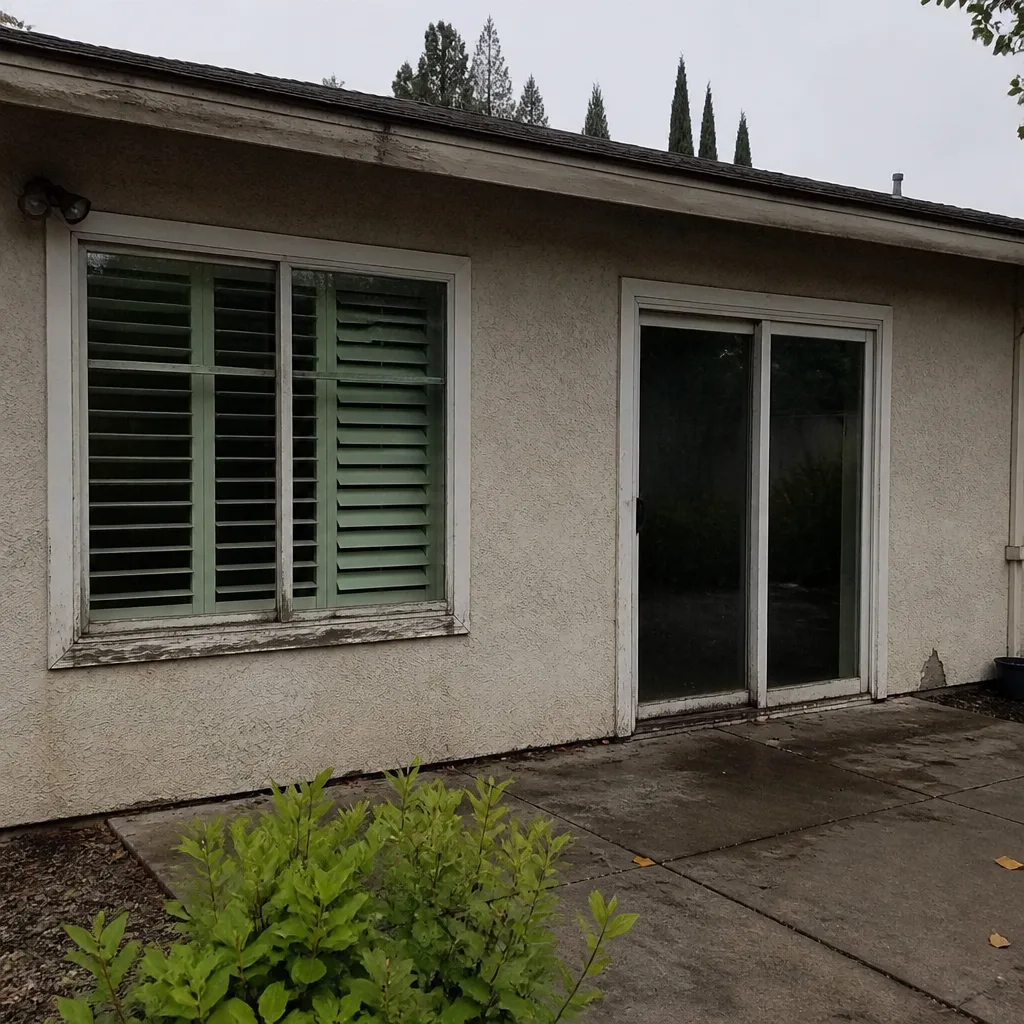 Before
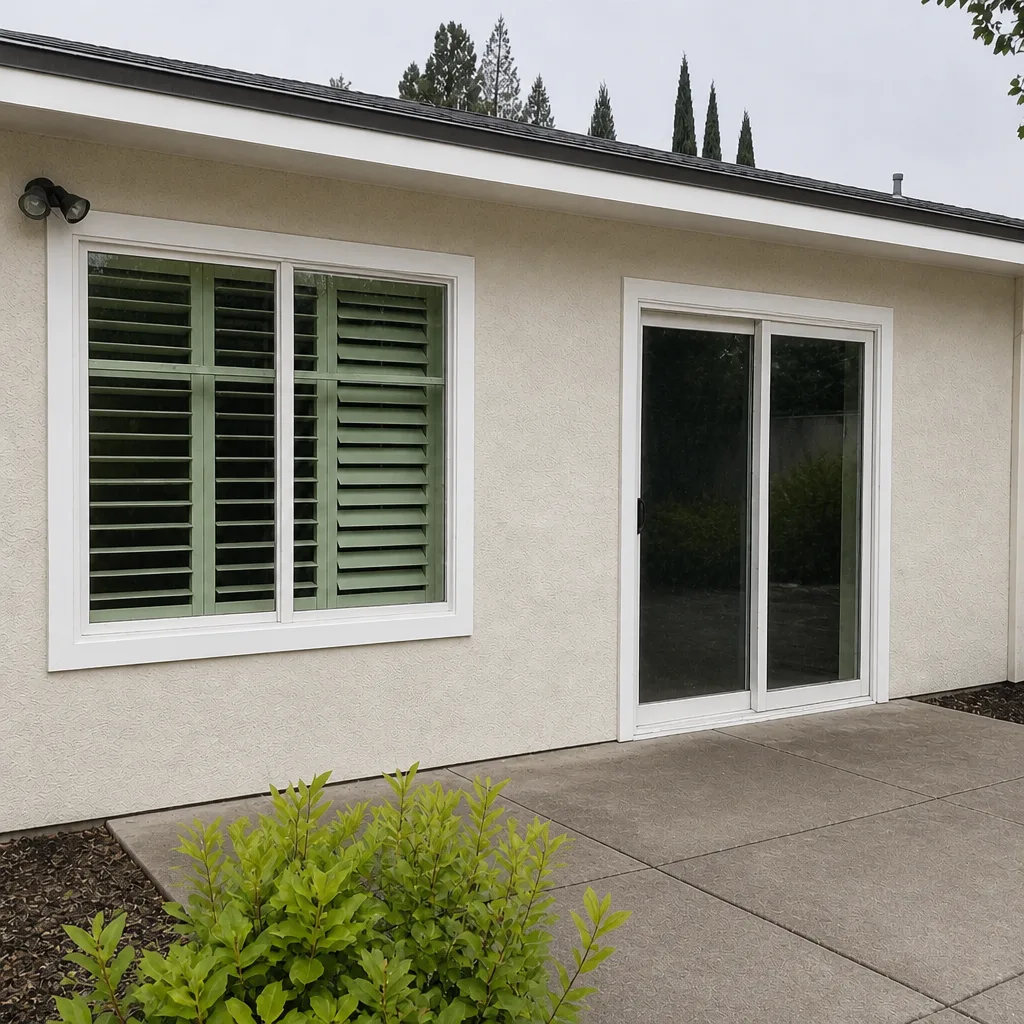 After
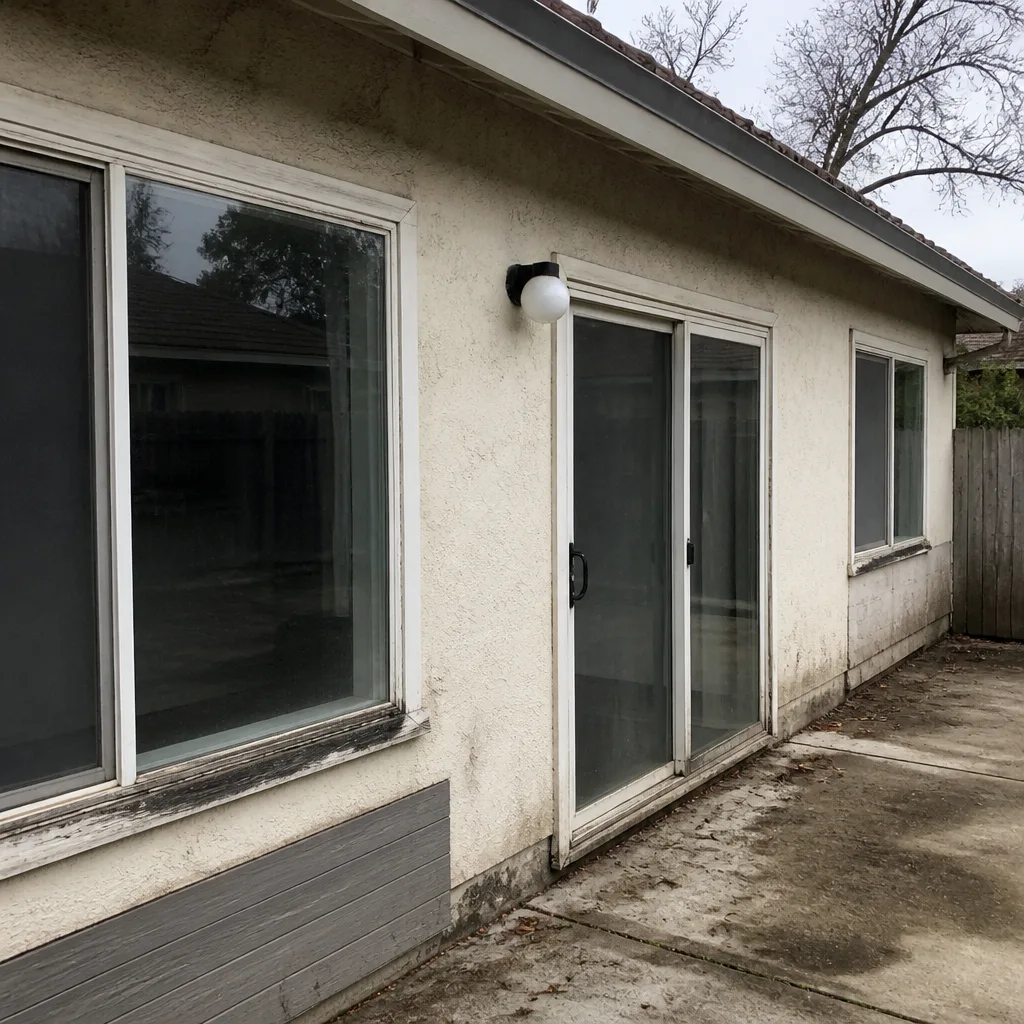 Before
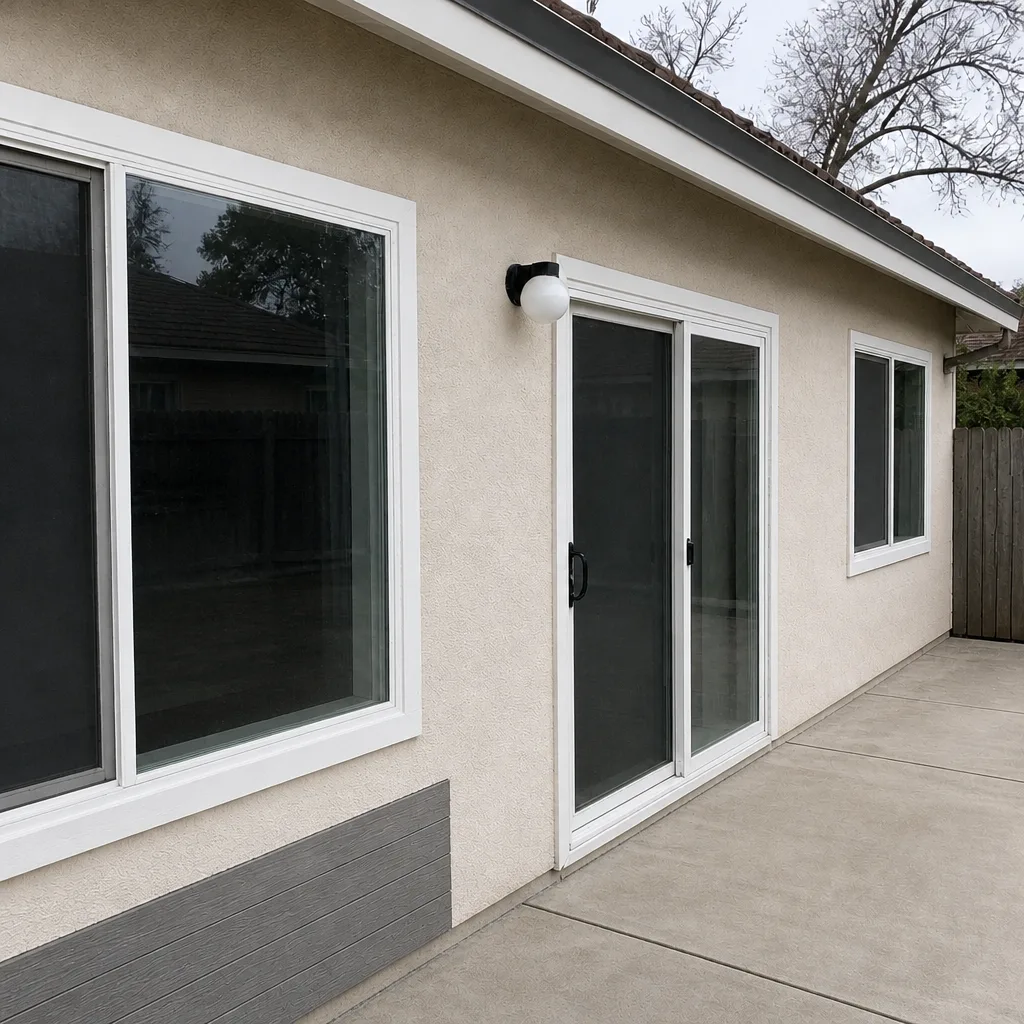 After
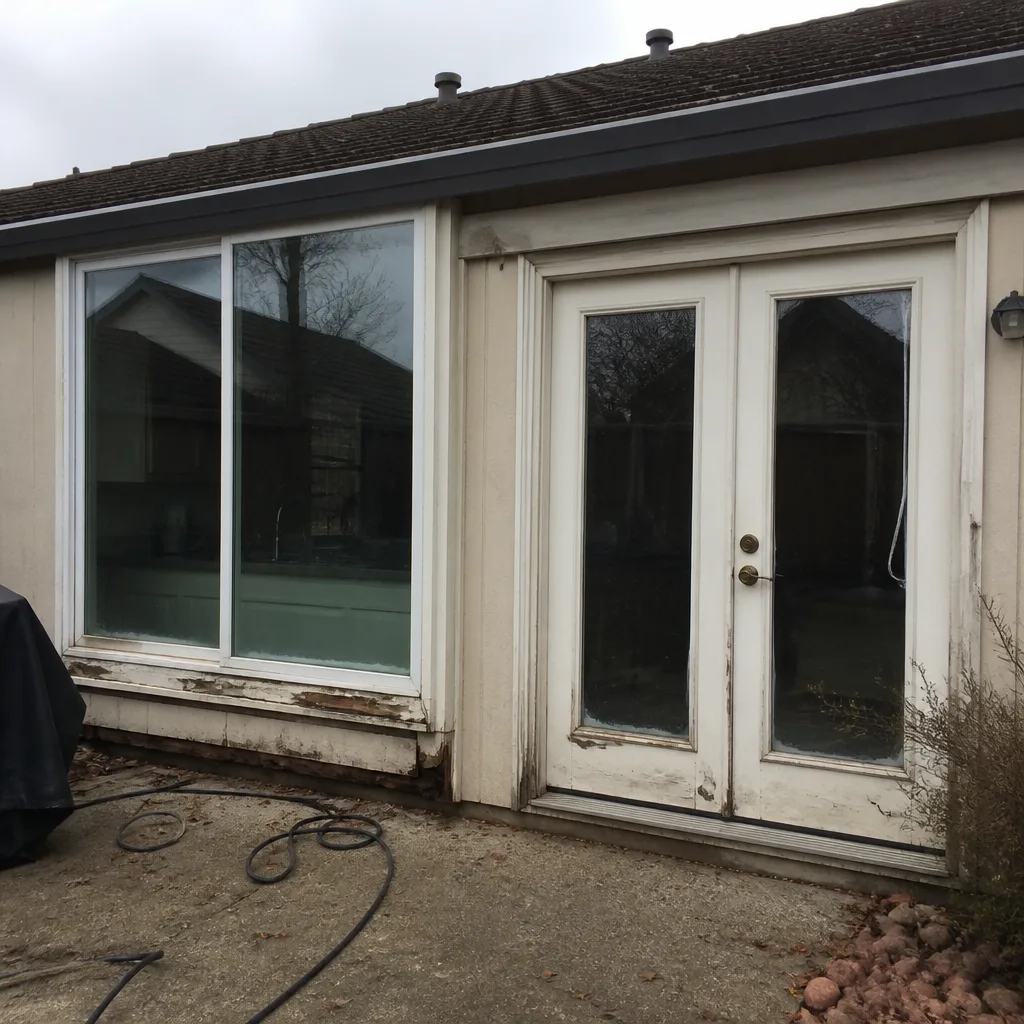 Before
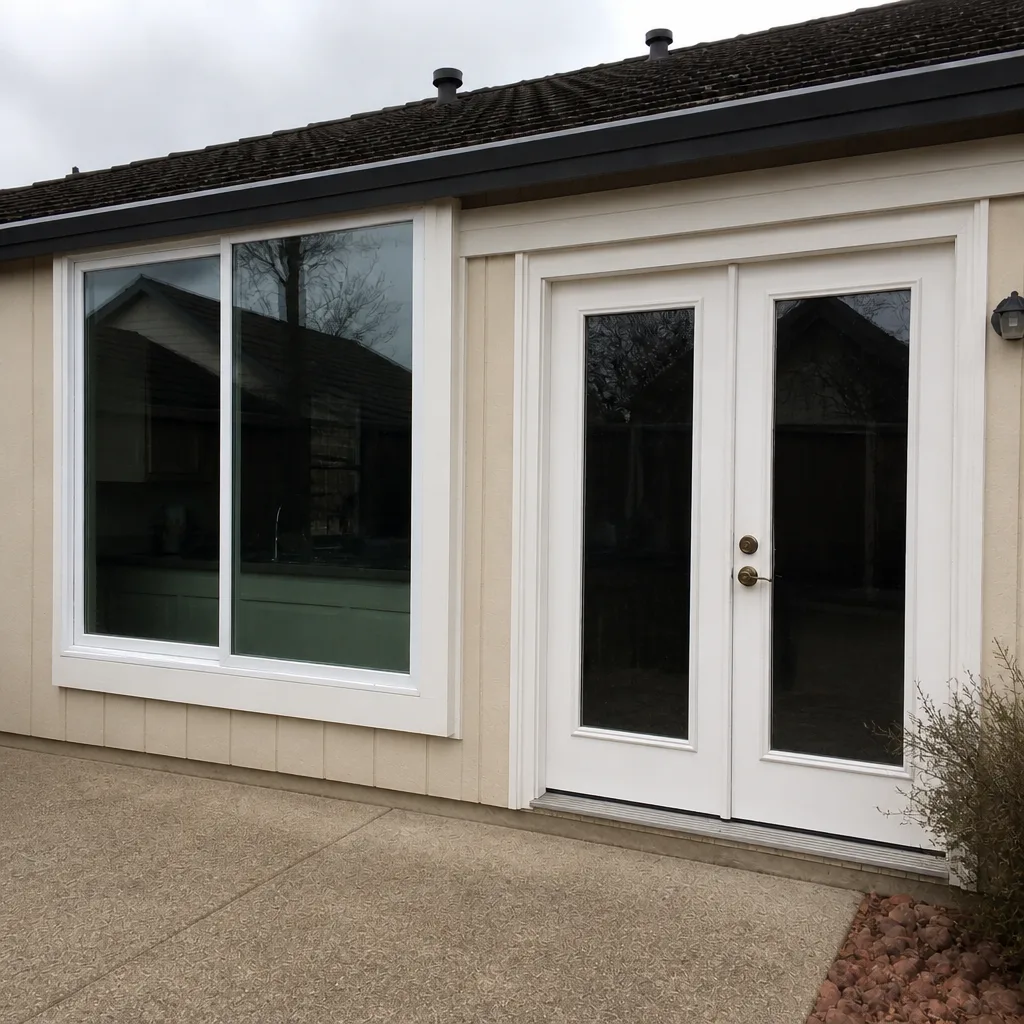 After
When to Call a Professional
Call a professional in Roseville when the project involves any full-unit replacement, hydraulic or spring door hardware, sliding door track or header work, anything that requires a permit, or any project in an HOA-governed community. Call when you’re unsure whether the existing rough opening needs reframing or whether the unit meets Title 24 for the climate zone. Call when the manufacturer’s warranty matters to you, because it probably does. Call when the job is three or more openings, since that’s the range where volume and specification really pay off, and it’s the minimum our company takes on. And call when the DIY math only works because you’re not counting your own time.
Roseville Window Replacement Pros offers free estimates in Roseville. Call (279) 529-6442 to schedule a walk-through. You’ll get a written, line-item quote, the licensed professional is licensed and insured as California requires, and our technicians have up to 13 years of experience working in this specific trade. We’ll tell you honestly which parts you can keep as your own work.
Frequently Asked Questions
Yes, a homeowner may perform their own work on their own primary residence in California, and Roseville will issue a homeowner permit for the job. What you cannot do is perform work that you’re not qualified to do safely, and you accept all liability for the installation, including warranty issues, inspection failures, and resale disclosures. The law permits it; the practical risk is what makes it a hard decision.
Roseville requires a permit for full-unit window and door replacement. A like-for-like replacement still needs a permit because the inspection is how the city verifies Title 24 compliance. Minor cosmetic work like trim and paint does not require a permit. Ask the city building department directly if your specific job is ambiguous. Call (279) 529-6442 for a free estimate if you’d prefer to have a permitted installation handled end to end.
Very likely, yes. Most window and door manufacturers require installation by a licensed contractor as a condition of coverage, and installation-related failures are excluded from warranty. The language is in the fine print, not the product sheet. Read the warranty card before you buy, and if it requires professional installation, plan accordingly. Call (279) 529-6442 for a free estimate if the warranty matters to you, which it usually should.
Costs vary widely by product line and opening size, so we don’t publish a number for a job we haven’t seen. What we can say is that the professional price includes the unit at volume pricing, permit, inspection, installation labor, disposal, and warranty preservation, and the DIY price includes the retail unit, all materials, your tools, your time, and the liability of a non-compliant installation. For an apples-to-apples comparison, subtract the value of warranty coverage and inspection from the DIY number. Call (279) 529-6442 for a free line-item estimate that lets you compare.
Yes, and it’s the hybrid approach we recommend to handy homeowners. You handle interior trim, casing, paint, and prep, and a licensed installer handles the unit setting, flashing, sealing, and permit. This captures real labor savings without touching the compliance or warranty risk. The dividing line is the building envelope, not the visible work. Call (279) 529-6442 for a free estimate on the installation portion.
The manufacturer supplies a compliance certificate with the unit, and the certificate is filed with the permit. Your job is to request it before purchase. If you’re buying from a supplier who can’t produce the certificate for your climate zone, that’s a red flag. A licensed installer will handle this routinely because it’s part of pulling the permit. Call (279) 529-6442 for a free estimate if you’d rather not chase certificates yourself.
The Bottom Line
The DIY vs professional question for Roseville windows and doors isn’t really about skill. It’s about consequences: permits, Title 24 compliance, HOA review, and manufacturer warranties all reward the licensed installation and penalize the amateur one. DIY the trim, the paint, and the prep. Let a licensed professional handle the unit, the flashing, and the permit. Choose the product deliberately, verify compliance, and confirm the warranty stays intact. For the parts you hand off, get a free estimate. Call (279) 529-6442 and we’ll walk your project with you, no pressure and no obligation.
Written by the team at Roseville Window Replacement Pros.